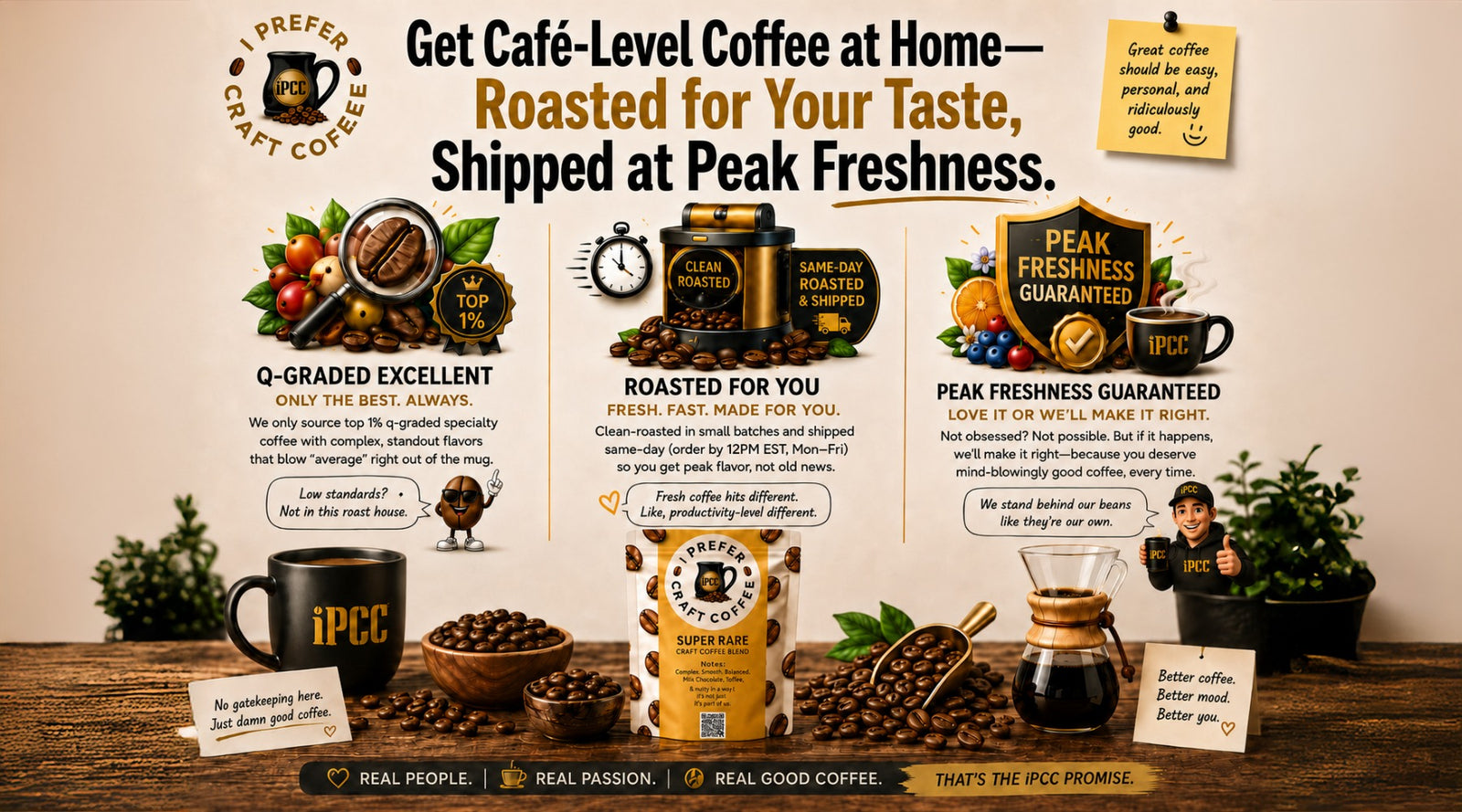
Same-Day Roasted Coffee Beans: Why Timing Is Yours To Control
Same-Day Roasted Coffee Beans: Why Timing Is Yours to Control
Learn how long same-day roasted coffee beans actually stay great, and how to brew within your own personal freshness window, from day one to week three.
Most people think fresher is always better, right up until the second cup.
Same-day roasted coffee beans give you something grocery store coffee never can: control. Not "drink it today or it's ruined" pressure. Real control over when you brew, based on how you like your coffee to taste.
Here's my honest opinion: I like my coffee just a few days rested, because I love that bright, punchy flavor. But I also enjoy the slower journey, watching the same bag change from week one to week two to week three. Neither way is wrong. That surprises a lot of people the first time they hear it.
By the end of this guide, you'll know exactly how long your coffee actually stays great, and how to use that window on purpose instead of guessing.

Fast Answer: How Long Do Same-Day Roasted Coffee Beans Stay Fresh?
Same-day roasted coffee beans typically stay at peak freshness for about 3 weeks after roasting. Many specialty coffee drinkers brew somewhere between 1 and 3 weeks post-roast, and flavor and aroma slowly fade after that, though the coffee is often still enjoyable for weeks beyond that window.
Why This Trips People Up
Here's why most people get this wrong: they assume "fresh" means "drink it immediately or it's already going downhill." That's not how coffee works.
Same-day roasted coffee beans start a clock, but it's a generous one. Coffee holds its best flavor for roughly 3 weeks, not 3 days. Some of the best cups I've ever had were beans resting for a week or two, not beans brewed the same afternoon they were roasted.
Common advice tells you to just "buy fresh coffee" and stops there. That advice skips the actual useful part: knowing where you are on the freshness timeline changes how the coffee tastes, brighter and sharper early on, more rounded and complex a bit later. No espresso machine or fancy grinder replaces that timing. It's a beans-and-time issue, not a gear issue.
What You'll Get From This Guide
By the end, you'll know your own ideal resting window, how to read a roast date like a pro, and how to brew same-day roasted coffee beans so tomorrow's cup tastes exactly the way you like it, whether that's bright and lively or deep and rounded.
How to Use Your Freshness Window on Purpose
Step 1: Confirm You're Actually Getting Same-Day Roasted Coffee Beans
What to do: Check that the roast date matches your order date, or is within a day or two of it.
Why it works: "Same-day roasted" only means something if the date on the bag proves it.
If X, then Y: If the roast date is more than a few days before your order, it's not truly same-day roasted, even if the label says "fresh."
Example: My Espresso Blend is roasted to order, so the date on your bag reflects your order, not a random batch from last month.
Step 2: Pick Your Starting Point in the Freshness Window

What to do: Decide if you want bright, punchy flavor (rest 1–3 days) or a more rounded, developed cup (rest 1–2 weeks).
Why it works: CO2 release right after roasting can make coffee taste sharp. A short rest smooths that out while keeping brightness.
If X, then Y: If you enjoy vibrant, lively coffee, brew within the first few days. If you enjoy smoother, more balanced flavor, wait 1–2 weeks.
Step 3: Track the 3-Week Peak Window
What to do: Plan to brew most of your bag within 3 weeks of the roast date.
Why it works: Coffee holds onto its best aroma and flavor for about 3 weeks. After that, both start fading gradually.
If X, then Y: If you're past week 3, don't panic, just expect a slightly milder cup, not a ruined one.
Step 4: Don't Panic Past 3 Weeks
What to do: Keep drinking your coffee past the 3-week mark if you want to. It's not "bad," just past peak.
Why it works: Flavor and aroma fade slowly, not instantly. Many drinkers, myself included, still enjoy coffee 5 to 6 weeks post-roast.
If X, then Y: If your coffee tastes noticeably flatter after a month, that's normal fading, not a defect.
Step 5: Brew With Real Numbers, Not Guesswork
What to do: Use a 1:16 coffee-to-water ratio, water at 195–205°F, and a 3–4 minute brew time for drip.
Why it works: Even perfectly timed, same-day roasted coffee beans need a fair ratio to show their best flavor.
If X, then Y: If your cup tastes weak, use a bit less water. If it tastes harsh, use a bit more.
Step 6: Store Beans to Protect Your Freshness Window
What to do: Keep beans in an airtight container, away from light and heat.
Why it works: Poor storage speeds up fading, shrinking your 3-week window down to just days.
If X, then Y: If you're using a bag within 2–3 weeks, keep it on the counter. If not, freeze small portions in a sealed bag.
Not sure where your own palate falls on this timeline yet? Andrew's Better Morning Buying Guide can help you figure out what you actually enjoy.
Same-Day Roasted Coffee: The Freshness Timeline
| Time Since Roast | What to Expect | Best For |
|---|---|---|
| Day 0–2 | Sharp, bright, sometimes slightly sour from CO2 | Drinkers who love bold brightness |
| Day 3–7 | Brightness settles, flavor opens up | A lively but balanced daily cup |
| Week 2 | Rounder, more developed flavor | Drinkers who like smoother complexity |
| Week 3 | Peak window closing, still excellent | Last stretch of ideal flavor and aroma |
| Week 4–6 | Gradual fading of flavor and aroma | Still enjoyable, slightly milder cups |
| Beyond 6 weeks | Noticeably flatter, but still drinkable | Backup coffee, not your best cup |
Buying Guidance: Reading a Roast Date Like a Pro
Roast date vs. best-by date. A best-by date can sit a year out. A roast date is what actually tells you where you are on the freshness timeline.
Fresh coffee vs. stale coffee. Fresh coffee, within that 3-week window, tastes bright and layered. Stale coffee, well past that window, tastes flat and dull.
Choosing roast levels. Lighter roasts tend to show freshness changes more clearly. Darker roasts can mask some of that fading behind smoky flavor.
Single origin vs. blends. Single origin beans, like my Peruvian Geisha, are a great way to actually taste the week-to-week changes. Blends, like my Deli Donut Blend, stay more consistent throughout the window.
Whole bean vs. ground. Whole bean holds onto freshness far longer than pre-ground coffee. Grind right before brewing whenever you can.
Storage. Airtight, dark, cool. Freeze extra portions if you won't finish a bag within your ideal window.
Why fresh, high-scoring specialty coffee wins. Same-day roasted coffee beans give you the starting line. What you do with the next 1–3 weeks is where your personal taste really comes into play. Curious what "fresh" should really mean? Here's what fresh roasted coffee beans online should actually include.
Which Coffee Should You Start With?

| If You Want... | Start Here |
|---|---|
| A smooth, easygoing daily cup | Deli Donut Blend |
| A better shot of espresso | Espresso Blend |
| A rare, high-scoring single origin to track week by week | Peruvian Geisha |
| Cold brew without the guesswork | Easy Cold Brew Kit |
| A rich, dessert-like cup | Chocolate Daydream Blend |
Want fresh, same-day roasted coffee beans on a schedule that matches your own freshness window? Check out my Best Craft Coffee Subscription, or see how to get fast and easy coffee delivery.
FAQ
What are same-day roasted coffee beans? Same-day roasted coffee beans are roasted on the same day your order is placed or processed, instead of coming from a pre-roasted batch that may already be weeks old.
How long do same-day roasted coffee beans stay fresh? They typically stay at peak freshness for about 3 weeks after roasting. Many specialty coffee drinkers brew within 1 to 3 weeks post-roast for the best flavor and aroma.
Is it better to brew coffee right after roasting or let it rest? Both work, and it comes down to personal taste. Brewing within a few days gives brighter, sharper flavor. Resting 1 to 2 weeks gives a more rounded, developed cup.
Can I still drink coffee beans with a roast date older than 3 weeks? Yes. The coffee is still safe to drink and often still tasty. You'll just notice gradually fading flavor and aroma the further you get past the 3-week mark.
Why does my coffee taste different in week one versus week three? Freshly roasted coffee releases CO2 early on, which can taste sharp. As that settles over the following weeks, flavor often becomes smoother and more rounded, up until the peak window starts to close.
Do I need special equipment to notice the difference in same-day roasted coffee beans? No. A simple drip maker or French press is enough to notice the shift from bright and lively to smooth and rounded, as long as you're using a fair coffee-to-water ratio.
PS: Simple shortcut for tomorrow morning: if your coffee tastes a little sharp right out of the bag, don't assume something's wrong. Give it a few more days to rest. That short wait alone can turn a slightly sour cup into a noticeably smoother one.
Also in Best Coffee To Buy Online Education
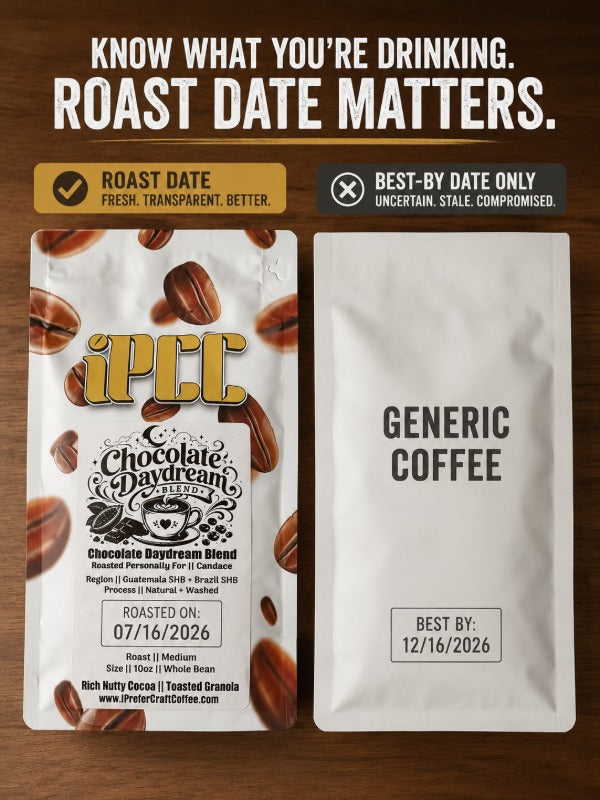

Coffee Beans With Roast Date: The One Label Detail That Actually Matters
This article explains why coffee beans with roast date are essential for judging real freshness, why a best-by date alone is a red flag rather than a freshness guarantee, and how home coffee lovers can use roast dates to choose fresher, better-tasting specialty coffee.
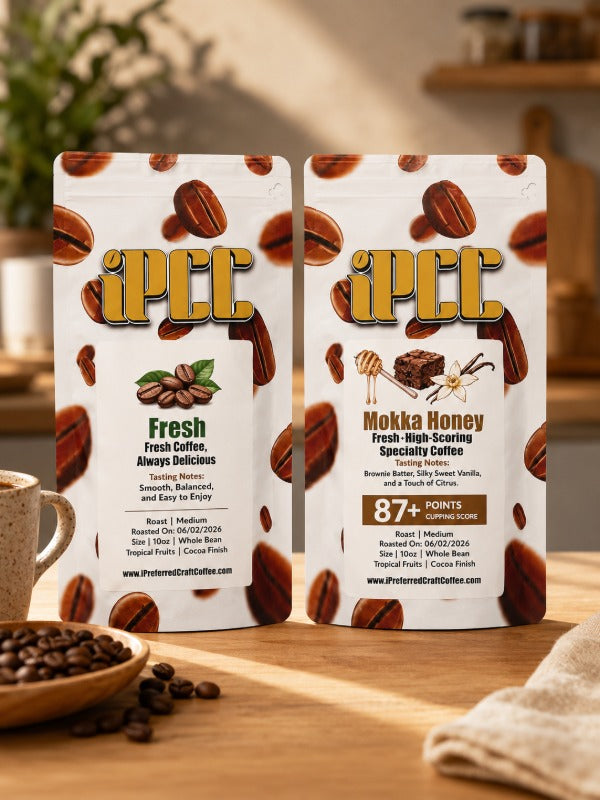

Best Fresh Roasted Coffee Beans Online: Why "Fresh" Alone Isn't the Finish Line
This article explains why fresh roasted coffee beans online are only part of the equation for great home coffee, and shows beginner specialty coffee buyers how pairing true freshness with high-scoring specialty grading, sourced from a small, independent roaster who understands their taste, leads to smoother, more flavorful, less bitter coffee at home.
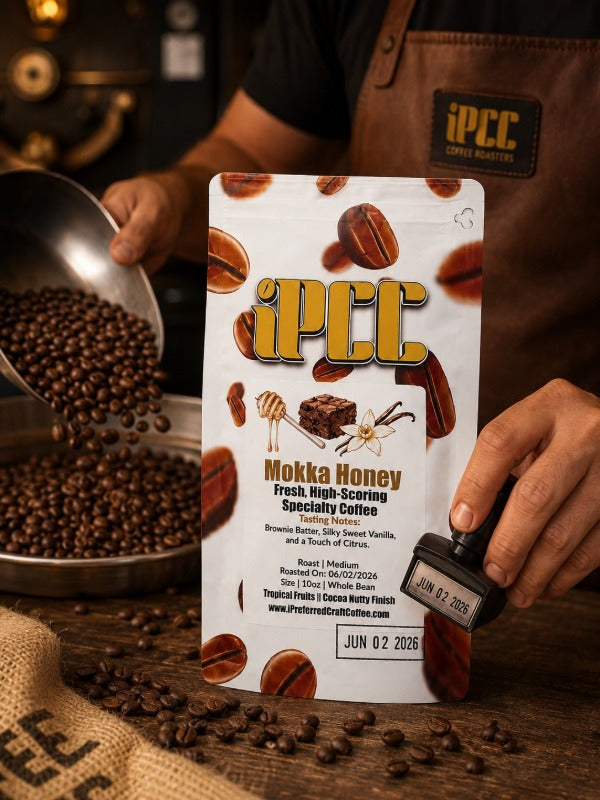

Coffee Beans Roasted to Order: How to Get Them at Home
This article explains what coffee beans roasted to order means, why roast timing matters more than vague "fresh" labels, and how home coffee lovers can source truly fresh specialty coffee, whether from a local roaster, an in-state roaster, or an online roaster offering a peak freshness guarantee.